Every question counts. ✊
🧬
Did you know?
The human body has ~37 trillion cells — more than the number of stars in the Milky Way.
Did you know?
The human body has ~37 trillion cells — more than the number of stars in the Milky Way.
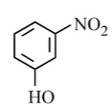

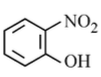
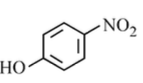
To determine which compound has intramolecular hydrogen bonding, we need to analyze the structures.Intramolecular hydrogen bonding occurs when a hydrogen atom is bonded to a highly electronegative atom (like or within the same molecule, allowing it to form a hydrogen bond with another electronegative atom in close proximity.Let's examine the options:Option 1:The structure is 2-nitrophenol. The group is ortho to the group.This allows the hydrogen from the group to form a hydrogen bond with the oxygen of the group.Therefore, intramolecular hydrogen bonding is possible.Option 2:The structure is This is a diatomic molecule, so intramolecular hydrogen bonding is not possible.Option 3:The structure is 2-nitrophenol (same as Option 1).Intramolecular hydrogen bonding is possible for the same reasons as in Option 1.Option 4:The structure is 4-nitrophenol. The group is para to the group.This spatial arrangement does not favor intramolecular hydrogen bonding.Conclusion:Intramolecular hydrogen bonding is present in Option 3 (2-nitrophenol).Therefore, the correct option is Option 3.
More practice, more score
Use hints to get start solving
Ask any question, get instant answers
Get detailed step by step solutions
Read while solving
Improve every day