Every question counts. ✊
🌿
Did you know?
A single strand of DNA, if uncoiled, would be ~6 feet long — yet it fits inside a cell nucleus.
Did you know?
A single strand of DNA, if uncoiled, would be ~6 feet long — yet it fits inside a cell nucleus.
Which amongst the following molecules produces polymerization to form neoprene?

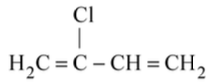

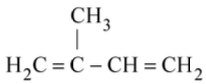
To determine which molecule polymerizes to form neoprene, we need to identify the monomer used in its synthesis.Neoprene is a synthetic rubber, also known as polychloroprene. It is produced by the polymerization of chloroprene.Let's analyze the options:Option 1: The structure is 1,3-butadiene • This is not chloroprene.Option 2: The structure is chloroprene • This is the correct monomer for neoprene.Option 3: The structure is vinylacetylene • This is not chloroprene.Option 4: The structure is isoprene • This is not chloroprene.Therefore, the correct option is Option 2, which is chloroprene.Chloroprene undergoes polymerization to form neoprene.Correct Option: 2
More practice, more score
Use hints to get start solving
Ask any question, get instant answers
Get detailed step by step solutions
Read while solving
Improve every day