Every question counts. ✊
🌡️
Did you know?
Absolute zero (−273.15°C) is the coldest possible temperature — at which atoms nearly stop moving.
Did you know?
Absolute zero (−273.15°C) is the coldest possible temperature — at which atoms nearly stop moving.
In which of the following compounds, the C—Cl bond ionization shall give the most stable carbonium ion?
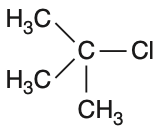
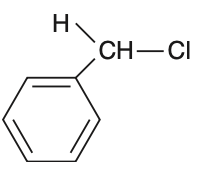
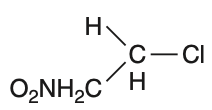
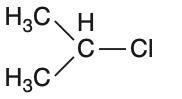
To determine which compound forms the most stable carbonium ion upon C—Cl bond ionization, we need to analyze the stability of the resulting carbocations.Carbocation stability is influenced by:• Hyperconjugation• Resonance• Inductive effectsLet's analyze each option:Option 1:The compound is a tertiary alkyl chloride. The resulting carbocation is tertiary, which is highly stable due to hyperconjugation from three methyl groups.Option 2:The compound is benzyl chloride. The resulting carbocation is benzyl, which is stabilized by resonance with the benzene ring.Option 3:The compound is a primary alkyl chloride with an electron-withdrawing nitro group. The resulting carbocation is primary and destabilized by the electron-withdrawing effect of the nitro group.Option 4:The compound is a secondary alkyl chloride. The resulting carbocation is secondary, which is less stable than a tertiary carbocation.Conclusion:The most stable carbocation is formed in Option 1, where the carbocation is tertiary and stabilized by hyperconjugation.Therefore, the correct answer is Option 1.
More practice, more score
Use hints to get start solving
Ask any question, get instant answers
Get detailed step by step solutions
Read while solving
Improve every day