Every question counts. ✊
🌱
Did you know?
Mitochondria have their own DNA — evidence they were once independent bacteria absorbed by early cells.
Did you know?
Mitochondria have their own DNA — evidence they were once independent bacteria absorbed by early cells.
An alkene on ozonolysis gives methanal as one of the products. Its structure is:
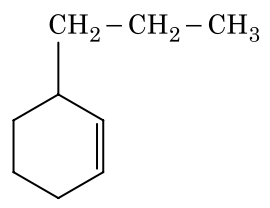
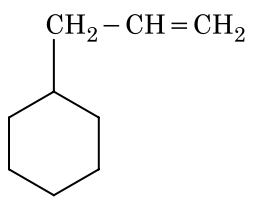
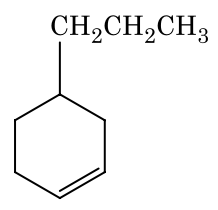
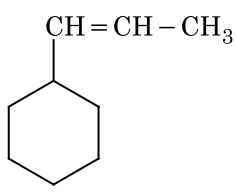
To solve this problem, we need to understand the ozonolysis reaction of alkenes.Ozonolysis of an alkene involves the cleavage of the double bond, resulting in the formation of carbonyl compounds.Given that methanal (formaldehyde, HCHO is one of the products, the alkene must have a terminal double bond with at least one hydrogen atom attached to the carbon involved in the double bond.Let's analyze the options:Option 1:The structure is a cyclohexene derivative with a propyl group. The double bond is not terminal,so it cannot produce methanal.Option 2:The structure is a cyclohexene derivative with a vinyl group (CH=CHThe double bond is terminal, and ozonolysis will cleave it to form methanal and another carbonyl compound.Option 3:The structure is a cyclohexene derivative with a propyl group. The double bond is not terminal,so it cannot produce methanal.Option 4:The structure is a cyclohexene derivative with a propenyl group. The double bond is not terminal,so it cannot produce methanal.Therefore, the correct option is Option 2, where the alkene has a terminal double bond capable of forming methanal upon ozonolysis.
More practice, more score
Use hints to get start solving
Ask any question, get instant answers
Get detailed step by step solutions
Read while solving
Improve every day