Every question counts. ✊
⚡
Did you know?
A bolt of lightning heats the surrounding air to ~30,000 K — five times hotter than the Sun's surface.
Did you know?
A bolt of lightning heats the surrounding air to ~30,000 K — five times hotter than the Sun's surface.
Which of the following carbocations is expected to be most stable?
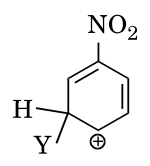
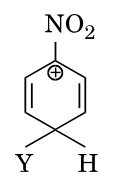
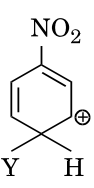
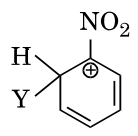
To determine the most stable carbocation, we need to consider the effects of substituents and resonance.• Option 1: The carbocation is adjacent to a nitro group, which is electron-withdrawing. However, the carbocation is also benzylic, allowing resonance stabilization with the benzene ring.• Option 2: The carbocation is directly attached to the nitro group, which strongly destabilizes it due to the electron-withdrawing nature of the nitro group.• Option 3: The carbocation is benzylic, but the nitro group is in the para position, which still allows some resonance stabilization, but less effective than Option 1.• Option 4: Similar to Option 2, the carbocation is directly attached to the nitro group, leading to destabilization.The most stable carbocation is the one in Option 1, where the benzylic position allows resonancestabilization despite the presence of the nitro group.Therefore, the correct option is Option 1.
More practice, more score
Use hints to get start solving
Ask any question, get instant answers
Get detailed step by step solutions
Read while solving
Improve every day