Every question counts. ✊
⚗️
Did you know?
One mole contains 6.022 × 10²³ particles — if a mole of seconds passed, it'd be 19 quadrillion years.
Did you know?
One mole contains 6.022 × 10²³ particles — if a mole of seconds passed, it'd be 19 quadrillion years.
The major product of the following chemical reaction is:
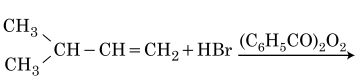
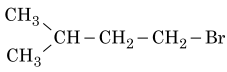
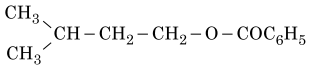
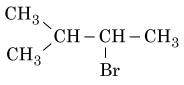
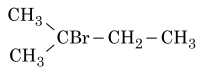
To solve this problem, we need to understand the reaction conditions.The reaction involves an alkene, HBr, and a peroxide In the presence of peroxides, the addition of HBr to an alkene follows the anti-Markovnikov rule.This is known as the Kharasch effect or peroxide effect.Step-by-step solution:1. Identify the alkene: The given alkene is 2-methylpropene: 2. Apply the anti-Markovnikov rule: In the presence of peroxides, the bromine radical adds to the less substituted carbon.3. Radical mechanism: • Initiation: Peroxide decomposes to form radicals. • Propagation: Bromine radical adds to the less substituted carbon of the alkene, forming a more stable radical. • Termination: The radical reacts with HBr to form the product.4. Product formation: The bromine adds to the terminal carbon, resulting in: Therefore, the major product is:Option 1: This corresponds to the structure shown in Option 1.
More practice, more score
Use hints to get start solving
Ask any question, get instant answers
Get detailed step by step solutions
Read while solving
Improve every day