Every question counts. ✊
🌱
Did you know?
Mitochondria have their own DNA — evidence they were once independent bacteria absorbed by early cells.
Did you know?
Mitochondria have their own DNA — evidence they were once independent bacteria absorbed by early cells.
Which one is most reactive towards nucleophilic addition reaction?
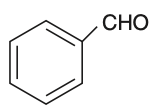
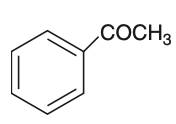
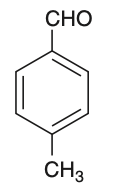
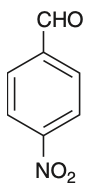
To determine which compound is most reactive towards nucleophilic addition reactions, we need to consider the electronic effects of substituents on the carbonyl group.Nucleophilic addition reactions typically occur at the carbonyl carbon, which is electrophilic. The reactivity depends on the electron-withdrawing or electron-donating nature of substituents.Let's analyze each option:Option 1: Benzaldehyde (CHCHO)• The phenyl group is slightly electron-withdrawing due to resonance, but it also donates electrons through hyperconjugation.Option 2: Acetophenone (CHCOCH)• The methyl group is electron-donating, reducing the electrophilicity of the carbonyl carbon.Option 3: p-Tolualdehyde (p-CHCHCHO)• The methyl group is electron-donating, which decreases the reactivity of the carbonyl group.Option 4: p-Nitrobenzaldehyde (p-NOCHCHO)• The nitro group is a strong electron-withdrawing group, increasing the electrophilicity of the carbonyl carbon.Conclusion:• The presence of the nitro group in p-nitrobenzaldehyde makes the carbonyl carbon more electrophilic and reactive towards nucleophilic addition.Therefore, the most reactive compound towards nucleophilic addition is Option 4: p-Nitrobenzaldehyde.
More practice, more score
Use hints to get start solving
Ask any question, get instant answers
Get detailed step by step solutions
Read while solving
Improve every day