Every question counts. ✊
🌊
Did you know?
Sound travels ~4× faster in water than in air — about 1,480 m/s vs 343 m/s.
Did you know?
Sound travels ~4× faster in water than in air — about 1,480 m/s vs 343 m/s.
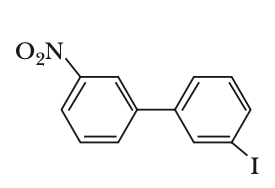
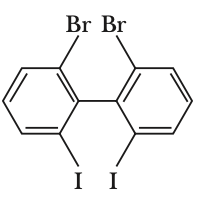
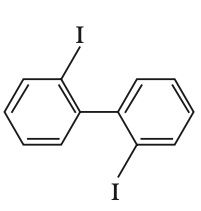
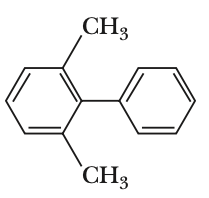
To determine which biphenyl compound is optically active, we need to consider the symmetry and steric hindrance of each compound.Optical activity arises when a compound lacks a plane of symmetry and has a chiral center or axis. In biphenyls, this can occur when the two phenyl rings are twisted out of plane due to steric hindrance, preventing free rotation.Let's analyze each option:Option 1:The compound has a nitro group and an iodine atom. The presence of the nitro group can cause steric hindrance, but the compound is not necessarily chiral.Option 2:The compound has two bromine atoms ortho to the biphenyl bond. This creates significant steric hindrance, preventing the two phenyl rings from being coplanar. This lack of coplanarity can lead to chirality due to restricted rotation, making the compound optically active.Option 3:The compound has two iodine atoms, but they are not positioned to create significant steric hindrance. The rings can rotate freely, so the compound is not optically active.Option 4:The compound has two methyl groups, which are smaller and do not create enough steric hindrance to prevent free rotation. The compound is not optically active.Therefore, the correct answer is Option 2, as it is the only compound with sufficient steric hindrance to be optically active.Correct Option: 2
More practice, more score
Use hints to get start solving
Ask any question, get instant answers
Get detailed step by step solutions
Read while solving
Improve every day