Every question counts. ✊
🌱
Did you know?
Mitochondria have their own DNA — evidence they were once independent bacteria absorbed by early cells.
Did you know?
Mitochondria have their own DNA — evidence they were once independent bacteria absorbed by early cells.
D-(+)-glucose reacts with hydroxylamine and yields an oxime. The structure of the oxime would be
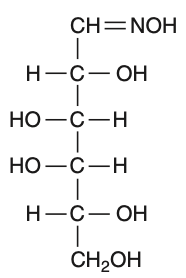
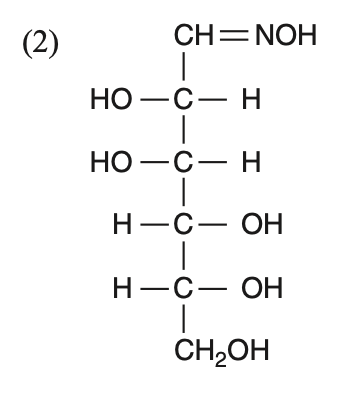
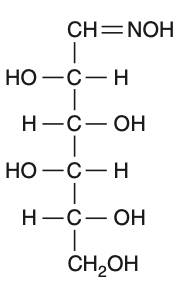
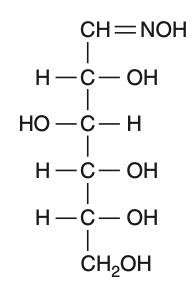
To solve this problem, we need to understand the reaction of D-(+)-glucose with hydroxylamine.• D-(+)-glucose is an aldohexose, meaning it contains an aldehyde group at the first carbon.• Hydroxylamine (NHOH) reacts with the aldehyde group to form an oxime.The reaction can be represented as:Aldehyde group: • The rest of the glucose structure remains unchanged.Let's analyze the options:Option 1: The oxime is formed at the first carbon, but the configuration is incorrect.Option 2: The oxime is correctly formed at the first carbon, and the configuration matches D-(+)-glucose.Option 3: The oxime is formed at the first carbon, but the configuration is incorrect.Option 4: The oxime is formed at the first carbon, but the configuration is incorrect.Therefore, the correct structure of the oxime is given in Option 2.
More practice, more score
Use hints to get start solving
Ask any question, get instant answers
Get detailed step by step solutions
Read while solving
Improve every day