Every question counts. ✊
⚡
Did you know?
Light from the Sun takes ~8 minutes 20 seconds to reach Earth, travelling at 300,000 km/s.
Did you know?
Light from the Sun takes ~8 minutes 20 seconds to reach Earth, travelling at 300,000 km/s.

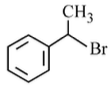
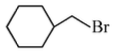
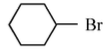
To solve this problem, we need to determine which compound undergoes an reaction at the fastest rate.The reaction rate depends on the stability of the carbocation formed after the leaving group departs.Let's analyze each option:Option 1:• The compound is bromobenzene.• The leaving group is directly attached to the benzene ring.• Aryl halides do not form stable carbocations, so is unlikely.Option 2:• The compound is 1-phenylethyl bromide.• The leaving group is attached to a secondary carbon adjacent to a phenyl group.• The resulting carbocation is benzylic, which is highly stabilized by resonance with the phenyl ring.Option 3:• The compound is cyclohexylmethyl bromide.• The leaving group is attached to a primary carbon.• Primary carbocations are not stable, so is less favorable.Option 4:• The compound is cyclohexyl bromide.• The leaving group is attached to a secondary carbon.• The resulting carbocation is secondary, which is more stable than primary but less stable than benzylic.Conclusion:• Option 2 forms a benzylic carbocation, which is the most stable among the options.• Therefore, the compound in Option 2 will undergo the reaction at the fastest rate.This corresponds to Option 2.
More practice, more score
Use hints to get start solving
Ask any question, get instant answers
Get detailed step by step solutions
Read while solving
Improve every day