Every question counts. ✊
⚡
Did you know?
A bolt of lightning heats the surrounding air to ~30,000 K — five times hotter than the Sun's surface.
Did you know?
A bolt of lightning heats the surrounding air to ~30,000 K — five times hotter than the Sun's surface.
The major product of the following reaction is:?
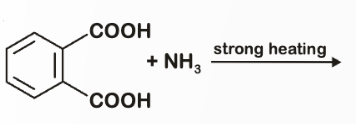
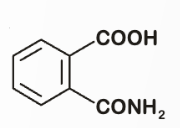
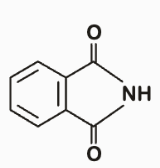
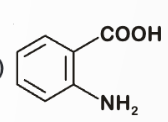
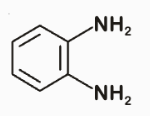
To solve this problem, we need to analyze the reaction between phthalic acid and ammonia under strong heating.Phthalic acid is a benzene ring with two adjacent carboxylic acid groups.When phthalic acid is heated strongly with ammonia, it undergoes a cyclization reaction.Here's the step-by-step mechanism:1. Formation of Ammonium Phthalate:• The carboxylic acid groups react with ammonia to form ammonium phthalate.2. Cyclization to Form Phthalimide:• Upon strong heating, the ammonium phthalate loses water molecules.• This results in the formation of a cyclic imide, specifically phthalimide.• The reaction involves the formation of a five-membered ring.Analyzing the options:• Option 1: Contains an amide and a carboxylic acid, which is incorrect.• Option 2: Shows phthalimide, which is the correct product.• Option 3: Contains an amine and a carboxylic acid, which is incorrect.• Option 4: Contains two amine groups, which is incorrect.Therefore, the correct option is Option 2, which corresponds to the formation of phthalimide.
More practice, more score
Use hints to get start solving
Ask any question, get instant answers
Get detailed step by step solutions
Read while solving
Improve every day